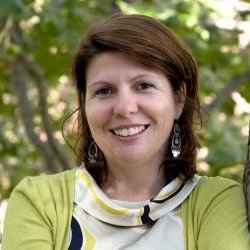
Anna Mae Duane
Director
anna.duane@uconn.edu
Anna Mae Duane is Professor of English and Director of the UConn Humanities Institute. She teaches and writes in the fields of American Studies, African American Literature, and the Medical Humanities. She’s particularly interested in how definitions of youth and childhood shape culture and policy in ways that require the abdication of rights in order to claim care. She is the author or editor of six books including Educated for Freedom: The Incredible Story of Two Fugitive Schoolboys who Grew Up to Change a Nation, and Child Slavery Before and After Emancipation: An Argument for Child-Centered Slavery Studies. Her work has been supported by the National Endowment for the Humanities, the Fulbright Foundation, and the Japan-US Friendship Commission. Her public-facing scholarship includes publications in Salon.com, Slate.com, and an ongoing podcast.
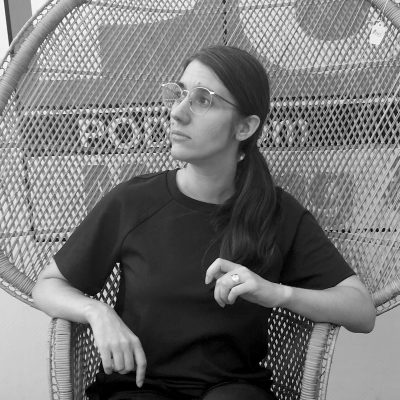
Elizabeth Della Zazzera
Associate Director of Communications & Outreach
elizabethdz@uconn.edu
Elizabeth Della Zazzera is assistant professor in residence in the History department. Her scholarship focuses on how ideas move on the ground—how their method of transmission and dissemination affects the ideas themselves—with a particular emphasis on the intellectual history of material texts and urban environments in revolutionary and post-revolutionary France. Her current book project explores the role of the periodical press, the theatre, and literary sociability in the bataille romantique: the conflict between romantics and classicists. She is also working on a project about the relationship between new urban technologies and ideas in pre-Haussmann Paris, from which she has published an article in French Historical Studies, a project about women’s literary almanacs in the late eighteenth and early nineteenth centuries, and one about the cultural origins of the French invasion of Algiers. Her first article, “Translating Revolutionary Time: French Republican Almanacs in the United States” was awarded the 2015 Book History essay prize. At UCHI, among other duties, Elizabeth organizes all communications strategy and leads the student success initiative, which includes overseeing the undergraduate fellowship program and the undergraduate advisory council.

Clarissa Ceglio
Associate Director of Collaborative Research
clarissa.ceglio@uconn.edu
Clarissa J. Ceglio is Associate Professor of Digital Humanities, Associate Director of Research for Greenhouse Studios, and Associate Director of Collaborative Research for UCHI. Working at the intersections of museum studies, public history, and digital humanities, her research focuses on the ways in which cultural institutions, past and present, engage diverse communities in issues relevant to individual and civic thriving, particularly through the affective and rhetorical use of artifacts—material, visual, and digital—to construct national and social imaginaries. Recent publications include A Cultural Arsenal for Democracy: The World War II Work of U.S. Museums and contributions to Radical Roots: Civic Engagement, Public History, and a Tradition of Social Justice Activism and U.S. Museum Histories and the Politics of Interpretation: Never Neutral. Through her teaching and research, Ceglio also collaborates with museums, libraries, and communities on interdisciplinary public-facing and grant-funded projects that engage diverse audiences in topics of contemporary concern.
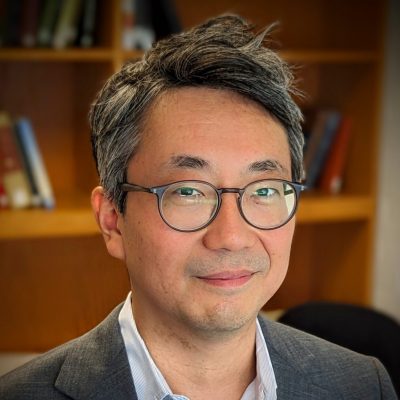
Yohei Igarashi
Associate Director of Academic Affairs
igarashi@uconn.edu
Yohei Igarashi is Associate Professor of English at the University of Connecticut. His writing focuses on how literature has historically related to communication, information, and technology. A specialist in British Romantic literature, he is the author of The Connected Condition: Romanticism and the Dream of Communication (Stanford University Press, 2020). He is currently writing a book about the role of computing in the history of literary studies in the U.S.; research for this project has been supported by the National Humanities Center, the National Endowment for the Humanities, and UCHI, among others. He served on the leadership team at UCHI and directed its Digital Humanities and Media Studies initiative from 2019 to 2023. [On leave for Fall 2026]

Nasya Al-Saidy
Managing Director and Fiscal Officer
nasya.al-saidy@uconn.edu
Nasya Al-Saidy is an environmental economist and manages the programs and finances for the Humanities Institute. She received her Master’s Degree in Economics from the University of Connecticut, specializing in Environmental Economics and Microeconomic Theory. While at the University of Massachusetts Boston, Nasya explored the cost-effectiveness of phytoremediation to reduce brownfield pollution in Boston’s low-income urban areas. She also worked with the Mauricio Gastón Institute to apply economic theory to public policy in the Boston area, with a focus on issues vital to the Latino community. Her current work seeks to develop and improve upon the game theoretic models used within the emissions permit market.

Shana Bartlett
Program Coordinator and Officer of Whimsy
shana.bartlett@uconn.edu
Shana Bartlett is the program coordinator at UCHI. She has extensive experience in the veterinary and financial fields, with an interest in 18th- and 19th-century artisan crafts.
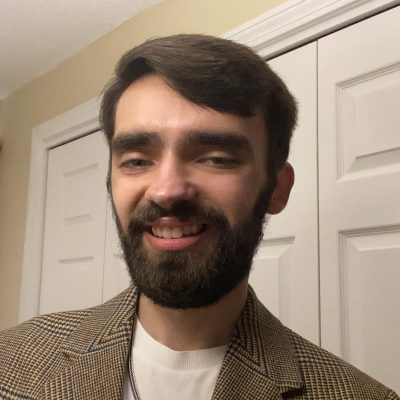
Timothy Brown
Graduate Assistant
Timothy Brown is a Ph.D. student at the University of Connecticut in the Department of History. He received his BA degree from the State University of New York at Buffalo and his MA degree from the University of Nevada, Las Vegas. Both degrees were in History with minors in Museum Studies and Public History, respectively. His research focuses on the history of political antislavery in the early American Republic. He has held internships at the Buffalo History Museum in Buffalo, New York and the Mob Museum in Las Vegas, Nevada. He is currently working on a community oral history project through the University of Connecticut History Department’s Engaged, Public, Oral and Community Histories (EPOCH).

Sabrina Claman
Graduate Assistant
Sabrina Claman (she/her) is an MFA candidate in Digital Media & Design at UConn, where she teaches and contributes to DMD and the Humanities Institute. Sabrina's practice and thesis research examine how memory, nostalgia, and grief intersect with storytelling and immersive media. Her themes of connection and everyday life aim to encourage empathy through accessible art.

Alina Ahmed
Graduate Assistant
Alina Ahmed is a PhD student at the University of Connecticut's Department of Philosophy. She has an M.A in Philosophy from University of Georgia, and a B.A. in Philosophy and Literature from FCCU. She is a receipient of the Harriot Fellowship at UConn, the AAUW International Doctoral Research Award, and the Fulbright Masters Award. Her research interests include Feminist Philosophy, Decolonial Theory, Third World Feminism, Social Epistemology, Critical Race Theory, Disability Studies, Transformative Justice, and Islamic Mysticism (Sufism).
Affiliate Fellows
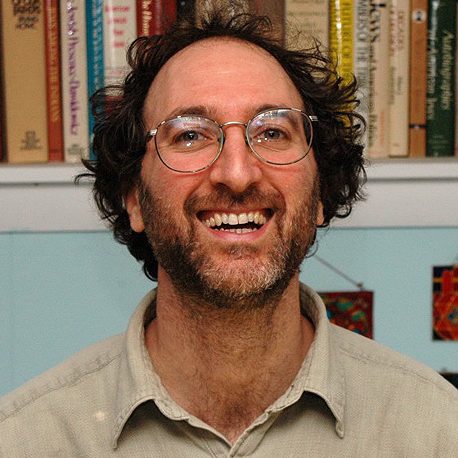
Richard Sosis
James Barnett Professor of Humanistic Anthropology
richard.sosis@uconn.edu
Richard Sosis is the James Barnett Professor of Humanistic Anthropology at the University of Connecticut. He is a faculty member in the Department of Anthropology and affiliated with the UConn Humanities Institute and Center for Judaic Studies and Contemporary Jewish Life. The central theme of his past and current research is human sociality. His work explores the relationship between religion, trust, and intra-group cooperation, with particular interests in ritual, magic, morality, and the dynamics of religious systems. To explore these issues, he has conducted fieldwork with remote cooperative fishers in the Federated States of Micronesia and with various communities throughout Israel. He is cofounder and coeditor of the interdisciplinary journal Religion, Brain & Behavior, which publishes research on the bio-cultural study of religion.
The James Barnett Professorship in Humanistic Anthropology was endowed in 2006 by Professor Dennison Nash for the purpose of supporting “a nationally recognized researcher, scholar, and teacher” who “will have made significant contributions to the field of anthropology.”
Advisory Board
Elizabeth Athens; Art and Art History
Meina Cai; Political Science & Social and Critical Inquiry
Elva Orozco Mendoza; Political Science
Nu-Anh Tran; History
Christopher Vials; English
Victor Zatsepine; History