Visiting Residential Fellows
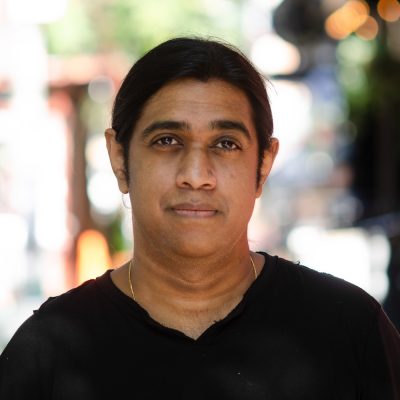
Surya Parekh
“Swimming in the Mainstream: The Politics of Language Learning”
Surya Parekh is Associate Professor in the Department of English at Binghamton University and affiliate faculty in Women, Gender, and Sexuality Studies. He is the author of Black Enlightenment (Duke University Press, 2023) and co-editor of Living Translation (Seagull, 2022) and Ritwik Ghatak: Occasional Essays for a 100th Birthday (Seagull, forthcoming). He has published in CR: The New Centennial Review, Nineteenth-Century Literature, Media Theory, and Postcolonial Directions in Education. His work has been supported by the Schomburg Center for Research in Black Culture. At UCHI, he will be working on completing his second monograph, “Swimming in the Mainstream.” The project locates a politics of language learning at threshold moments: cusps of colonialism, emancipation/independence, and postcolonialism. It considers how marginalized groups, as they enter an existent mainstream, also try to change or broaden it. These moments trouble our binaries of assimilationalist and radical by asking us to consider the heterogeneous, sometimes murky, politics of the center.

Wesley Phelps
“Queering the Lone Star State”
Wesley Phelps is Professor of History and University Distinguished Teaching Professor at the University of North Texas, where he teaches courses on recent United States history and queer history. He received his Ph.D. in history from Rice University in 2010. His research focuses on how democracy operates at the grassroots level and how marginalized groups of people have struggled to participate in the democratic experiment. His first book, A People’s War on Poverty: Urban Politics and Grassroots Activists in Houston, was published by the University of Georgia Press in 2014. Phelps’ second book, Before Lawrence v. Texas: The Making of a Queer Social Movement, was published by the University of Texas Press in 2023 and was awarded the Coral Horton Tullis Memorial Prize for the Best Book on Texas History by the Texas State Historical Association. His research has been supported by the National Endowment for the Humanities, the American Historical Association, and the Lyndon Baines Johnson Foundation. His work has appeared in the Journal of Social History, the Journal of Southern History, and Peace and Change. Phelps also works in the field of digital humanities. In 2023, he created Queering the Lone Star State, a research-based, narrative-driven, documentary-style podcast series tracing LGBTQ history in Texas. The first season focuses on ten legal cases that challenged the Texas sodomy law between 1969 and 2003. He will spend his fellowship year at the Humanities Institute completing production scripts for a second season of Queering the Lone Star State. Consisting of ten to twelve episodes, the new season will push beyond the courtroom to highlight critical moments in the movement for queer equality in Texas.
Faculty Residential Fellows
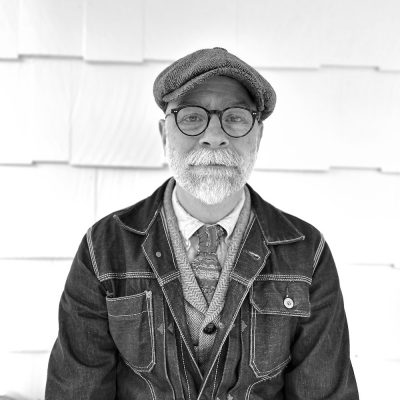
Daniel S. Adler
“Becoming Human: Neanderthal-Modern Human Interactions and Interconnectedness”
Daniel Adler is and Associate Professor in the Department of Anthropology with over 30 years experience investigating ancient human behaviors, cultures, and lifeways in Western Europe, the Middle East, and the south Caucasus. Since 1995 he has directed over 10 interdisciplinary archaeological projects in the republics of Georgia and Armenia spanning the last 2,000,000 to 20,000 years, with a primary focus on understanding Neanderthal-Modern Human interactions and what it means to be human. This work seeks to bridge the perceived behavioral and cognitive gaps between Neanderthals and ourselves, challenge traditional beliefs in our own uniqueness and question the validity of our sapiens-centric worldview, develop a deeper appreciation of Neanderthal resiliency and agency, and contribute to the ongoing restoration of Neanderthal humanity. These efforts, conducted in collaboration with scholars from over 25 countries, have resulted in numerous book chapters, edited volumes, grants, professional and public lectures, and peer-reviewed articles in journals such as Science, Journal of Human Evolution, Current Anthropology, and Nature. Through UConn’s Experiential Global Learning Dr Adler has directed seven sessions of UConn’s Archaeological Field School in Armenian Prehistory with support from UConn’s Norian Armenian Programs Committee. Dr Adler earned his BA at the University of Connecticut and his MA and PhD at Harvard University.
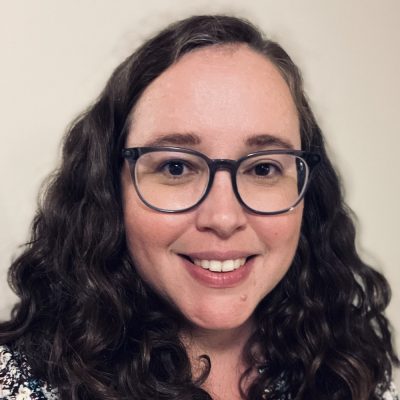
Emma Amador – JER Fellow
“Bright Futures: How Antonia Pantoja’s Vision of Community Organizing Sparked Movements for Latina and Puerto Rican Rights”
Emma Amador is an Assistant Professor of History at the University of Connecticut. Her work focuses on Puerto Ricans, Latinas in the United States, and histories of women and gender. Dr. Amador’s first book, The Politics of Care Work: Puerto Rican Women Organizing for Social Justice (Duke University Press, 2025), received an Honorable Mention for the Sharon Harris Book Award from UCHI. As a Justice, Equity, and Repair fellow at UCHI, Dr. Amador will work on her second book, “Bright Futures: How Antonia Pantoja’s Vision of Community Organizing Sparked Movements for Latina and Puerto Rican Rights,” a biography of trailblazing Afro-Puerto Rican civil rights activist Dr. Antonia Pantoja who became the first Puerto Rican woman to receive the Presidential Medal of Freedom in 1996. She is also currently working on a long-term book project, Community Work: Puerto Rican Women and Feminist Politics, that examines the history of Puerto Rican feminist activists in the United States. Dr. Amador was previously a Research Fellow at the Center for Puerto Rican Studies at CUNY, Hunter College (2024-2025), a Presidential Postdoctoral Fellow at Brown University, a SITPA Mellon Fellow at Duke University, and a Ford Foundation Dissertation Fellow. She is currently co-editing a special issue of CENTRO Journal: Journal of the Center for Puerto Rican Studies on “New Histories of Health, Care Work, and Healthcare Activism.” Her work has been published or is forthcoming in LABOR: Studies in Working-Class History, ILWCH: International Labor and Working-Class History, Journal of American Ethnic History, and Modern American History.
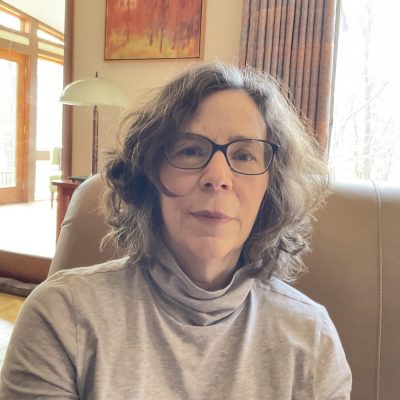
Eleni Coundouriotis
“History for the Future: Twenty-First Century African Historical Fiction”
Eleni Coundouriotis is Professor of English and Comparative Literary Studies at the University of Connecticut. Her research focuses on the narration and documentation of war, humanitarianism, statelessness, and the history of anticolonial struggle. She is the author of Claiming History: Colonialism, Ethnography and the Novel (1999), The People’s Right to the Novel: War Fiction in the Postcolony (2014) and Narrating Human Rights in Africa (2021).
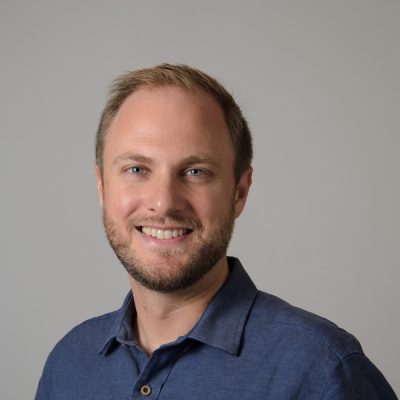
Joshua Mayer
“Territory as Freedom: Building a Black and Indigenous Future in Nicaragua”
Joshua Mayer is an assistant professor of Anthropology and Native American and Indigenous Studies (Department of Social and Critical Inquiry) at the University of Connecticut, where he is also affiliated with the Africana Studies Institute. He is a political anthropologist examining the relationships between settler capitalism, imperialism, territorial governance, and Black and Indigenous freedom. Since 2014, Mayer has conducted community-collaborative, ethnographic research with the Indigenous Rama and Black Kriol peoples of southeastern Nicaragua, including with research funding from the National Science Foundation, the Social Science Research Council, and the Fulbright Program. He also serves as a fellow at the Oakland Institute, a board member of the Association for the Anthropology of Policy, and an expert witness in U.S. and U.K. immigration courts. As a UCHI faculty fellow, he will be working on his book manuscript, “Territory as Freedom: Building a Black and Indigenous Future in Nicaragua,” which examines joint Rama and Kriol territory-building efforts amid settler colonial extraction, dispossession, and authoritarianism.
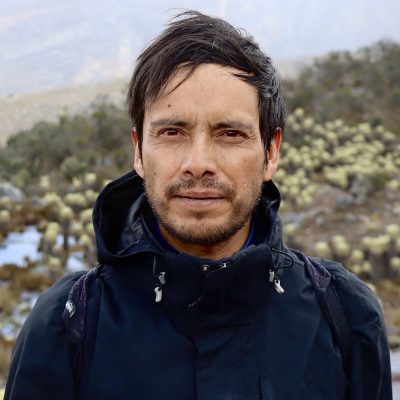
Camilo Ruiz
“Participation and the Politics of Knowledge: A Collection of Multimodal Participatory Action Research Projects in Colombia and the United States”
Camilo Ruiz is an Assistant Professor of Anthropology at the University of Connecticut whose research bridges medical anthropology, public health, and participatory action research to address health inequities, migration, labor, armed conflict, and environmental justice across the United States and Colombia. His scholarship combines long-term ethnographic research with visual, artistic, and participatory methodologies, advancing community-engaged approaches that generate both academic knowledge and tangible public impact. He has published in leading interdisciplinary journals, including Medical Anthropology, Journal of Migration and Health, Etnográfica, and Maguaré. His current research includes projects examining heroin use and methadone treatment in Colombia, collective healing through community arts, immigrant labor and wage theft in the United States, and participatory environmental research with Indigenous communities in the Colombian Amazon. As founder and director of the People’s Ethnography Lab at UConn, Ruiz collaborates with grassroots organizations to co-produce research, public exhibitions, documentaries, and multimedia projects that connect scholarship with community action. His work has been supported by competitive grants from the University of Connecticut, the Inter-American Foundation, Fulbright, and the University of Pittsburgh, and has received international recognition, including the 2024 Ammodo Architecture Award for Social Engagement for The Forest of Memory, a community-designed memorial park created with survivors of the Colombian armed conflict.
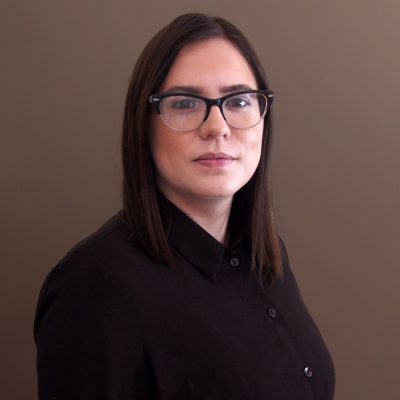
Kali Simmons
“The Savage Screen: Indigeneity in the Modern American Horror Film”
Dr. Kali Simmons is an assistant professor of English and Social and Critical Inquiry at the University of Connecticut where she serves on the executive committee for Native American and Indigenous Studies. Prior to joining UConn, Dr. Simmons was an assistant professor of Indigenous Nations Studies at Portland State University. As a 2026–2027 fellow at UCHI she will complete a manuscript for her forthcoming book project “The Savage Screen: Indigeneity in the Modern American Horror Film.” The Savage Screen documents, analyzes, and historicizes how Indigenous Peoples have been represented in contemporary American cinema. By re-contextualizing horror cinema as existing within a still unfolding settler-colonial project, the book exposes how popular culture participates in the (re)production of anti-Indigenous worldviews and power structures while also, to varying degrees of depth and effectiveness, critiquing settler colonialism, racism, class politics, and patriarchy in the United States. Dr. Simmons has published work in American Indian Quarterly, the Journal of Cinema and Media Studies, and on Vulture.com.
Dissertation Research Scholars
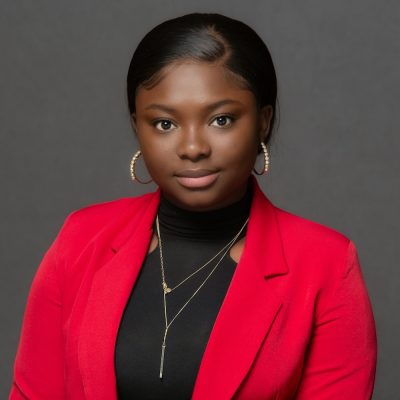
Sarah Boateng
“Speaking for Survival: Black Women’s Communicative Agency in Racialized Maternal Healthcare in the US”
Sarah Nuamah Boateng is a Ph.D. candidate in Communication at the University of Connecticut specializing in health communication, with a focus on maternal health equity, patient–provider communication, and the communicative dynamics shaping health disparities. Her research examines how structural inequities, cultural contexts, and institutional practices intersect in clinical interactions, particularly for women of color. Her work has been published in leading journals including Social Science & Medicine and the Journal of Health Communication and has been recognized by the UConn 100 Years of Women Scholarship and the Christine N. Witzel Award Fund. Her dissertation develops a communicative agentic framework to explore how Black women in the United States navigate perinatal healthcare interactions within a racialized medical system. Grounded in Black Feminist Thought and critical qualitative approaches, her research centers lived experiences and highlights communication as a site of agency, resistance, and meaning-making, with implications for improving patient–provider relationships and advancing equitable maternal healthcare.
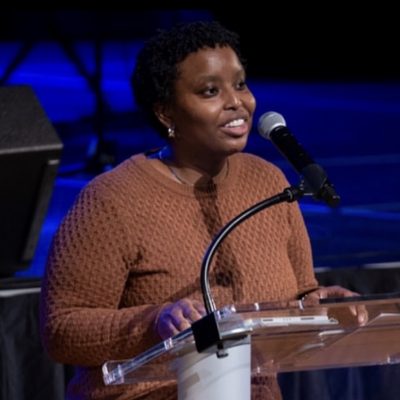
Ananda Griffin – Richard Brown Dissertation Fellow
“What We Learn from Tears and Laughter: Emotions as an Epistemic Resource”
Ananda Griffin is a 4th Year PhD candidate in the Philosophy Department at UConn. Ananda is a graduate of Spelman College in Atlanta, GA, where she graduated Summa Cum Laude, as a Philosophy Major and member of the Honors and Social Justice Programs. During her time at UConn, she earned her M.A. and became an Emotion and Society Lab Fellow. Ananda’s dissertation is titled, “What We Learn from Tears and Laughter: An Account of Emotion as an Epistemic Resource,” which explores the ways that emotion helps us understand the world around us. Ananda argues that emotion plays two important epistemic roles: allowing us to make meaning of the world around us and motivating the pursuit of knowledge. Additionally, the dissertation analyzes the harms that arise from the denial of emotion’s epistemic impact. Ananda shows the ways that affective injustice, social practices that systemically invalidate certain people’s emotions, can sometimes function as an epistemic injustice, invalidating or ignoring a group’s knowledge on account of their identity. She argues that these injustices do not pass without resistance, using Black women of the Great Migration as key examples of epistemic and affective refusal. In order to shape her work, Ananda draws on Black Feminism, Philosophy of Mind, Psychology, and other fields. Her work joins and adds a unique voice to the chorus of Black Feminist voices that lay bare the ways emotion shapes our lives.
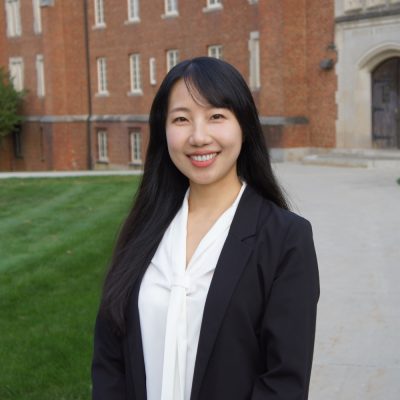
Chloe M. Kwak – Draper Dissertation Fellow
“Diasporic Group Subjectivity: Distinct Group Identities and Memories of "Comfort Women" in Korean American Communities”
Chloe M. Kwak is a Ph.D. candidate in the Department of Political Science at the University of Connecticut. Her research examines the “comfort women” issue through a feminist lens, centering on the insights of feminist international law scholars. She explores the interplay between communities and states in memory politics, with a particular focus on the construction of diasporic memories and the establishment of memorials. Her recent scholarship includes “Trick or Treat: Confronting the Hauntological Cycle of De- and Re-Commemorating the Statue of Peace,” published in The Asia-Pacific Journal: Japan Focus (2026). Additionally, her article “Beyond State Immunity: Feminist Interventions in International Law and Survivor-Centered Justice in the Comfort Women v. Japan Rulings” is forthcoming in the International Feminist Journal of Politics. Kwak received an honorable mention from the Feminist Theory and Gender Studies (FTGS) section of the International Studies Association (ISA) for her paper “Unsilenced Voices of Comfort Women: The 2023 Court Decision to Deny State Immunity of Japan,” presented at the 2024 annual conference.
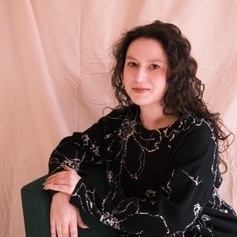
Dunahay Pereyra
“Managing (Un)Feminine Bodies: Conceptions of Self and Illness in Polycystic Ovary Syndrome Patients”
Dunahay Pereyra is a doctoral candidate in Sociology at the University of Connecticut. Her research is situated at the nexus of medical sociology, disability studies, gender studies, and the sociology of embodiment with a focus on the lived experiences of chronic illness and disability, particularly for invisibilized chronic illnesses. Her research agenda builds upon theories of the social construction of illness to investigate the influence of dominant social norms about gender, ability, and age on health knowledge and bodily expectations. Using critical methods and epistemologies, her work finds that the mechanisms through which health knowledge about invisible chronic illnesses is produced ultimately leaves patients to parse out meanings in their experiences amidst both social and medical knowledge. Her dissertation centers qualitative narrative interviews with polycystic ovary syndrome (PCOS) patients to understand how social and medical knowledge is constructed for chronic illness patients, how patients engage in meaning-making around chronic illness, and how their social and reproductive futures are shaped by illness. Through this research, Dunahay argues that the gendered and ableist social expectations of bodies intimately shape PCOS patients’ experiences of and access to diagnosis, treatment, and ongoing management of PCOS. Her work makes an important intervention in the field of sociology by centering a critical disability lens and theorizing about how ableism works in tandem with other axes of oppression and privilege to produce disparate experiences navigating chronic illness. Dunahay’s research and teaching have been recognized by the American Sociological Association, Wood Raith Living Trust, and the University of Connecticut’s Center for Excellence in Teaching and Learning, among others.
Undergraduate Research Fellows
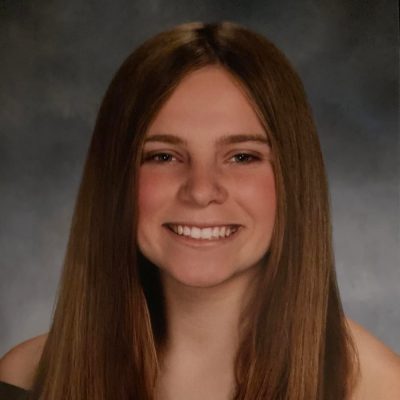
Kimberly Butynes
“Arguments with My Dad”
Project advisor: Jane Gordon
A junior at the University of Connecticut, Kim Butynes is double majoring in history and political science with a minor in human rights. Since her greatest dream is to be a big shot United Nations lawyer who fights for more effective human rights laws, she is currently on the pre-law track. Having grown up as a liberal lesbian in a rural conservative New Jersey town, Kim realized when attending a left-leaning university that there is an issue plaguing Republicans and Democrats alike: we forgot how to talk to each other just when we need most to remember.
As a politically active teen, Kim vilified her father because of who he voted for. She soon realized that it was not her father who was committing the atrocities plastered across news channels nor was causing those affronts his intention at the ballot box. With polarizing media and entertainment channels cultivating demonization of political opposition, necessary political imagination and energy is being traded for narrowly channeled anger and hatred. This misdirection interferes with the conversations vital not only to ending cycles of disparagement, but encouraging bold, outside-of-the-box, creative solutions. With the federal and many state governments cynically blaming immigrants for challenges facing this country, Kim wanted to examine history’s greatest political insights to foster solution-seeking, civic conversations.
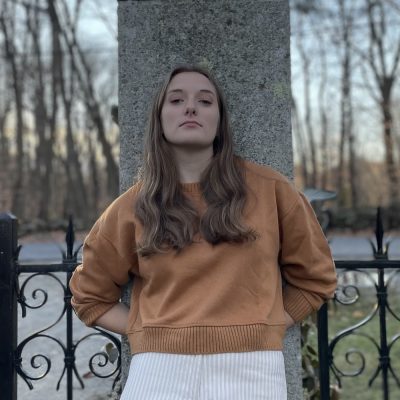
Elly Hume
“Trade, Production, and Cultural Transmission: Maritime Perspectives on Material Culture in Antiquity”
Project advisors: Kevin Feeney
Elly Hume is a senior University Scholar from Princeton, MA, majoring in Individualized (Maritime Archaeology and Classical Studies) and History, with a minor in Global Studies. Elly works as a Research Assistant in UConn’s Park Boush Lab, exploring independent research in Earth Science alongside faculty. On campus, she is the President of Climate & Mind Network, a TME Mentor, an active brother of the service fraternity Alpha Phi Omega, and frequently travels abroad for both research and recreation. In her free time, Elly enjoys reading, hiking, and kayaking.
For her fellowship project, Elly will focus on material culture as a key aspect of archaeological study, informing vital discussion around characteristics of civilizations and their relationships with maritime practices. Tracing the impacts of cultural diffusion, maritime modes of production, and relationships of exchange, the project aims to utilize the science and methodology of archaeological discoveries alongside practical nautical experiences. The goal of this work is to demonstrate the relevance and interconnectedness of maritime perspectives in ancient societies. In doing so, she hopes to contribute to and challenge current approaches to theoretical research and argue for interdisciplinary understandings of history and archaeology.
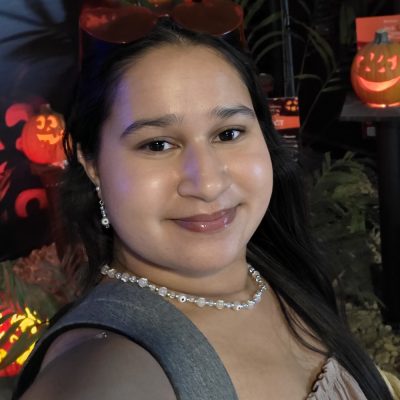
Natasha Khetan
“Invisible Pain, Visible Stories: The Endo Experience Through a Middle-Grade Fictional Novel”
Project advisors: Anna Mae Duane
Natasha Khetan is a senior pursuing a dual degree: a BS in Allied Health Sciences and a BA in Disability Studies, the latter being an individualized major. Natasha is highly involved on campus, serving as an RA for the Public Health House Learning Community, an IMJR mentor for aspiring individualized majors, a Center for Students with Disabilities Tech Team member, a Student Program Director for CO Alternative Breaks, President of UConn Muay Thai, and a BOLD Women's Leadership Network Scholar. Her BOLD Scholar project is a dual community service and research project in the Houston, TX region that focuses on youth endometriosis awareness and education, a topic she is passionate about, via the distribution of the Adolescent Guide to Endo, a youth-centered pamphlet created in collaboration with CT EndoRISE, to school nurses’ offices, and conducting qualitative research to evaluate the effectiveness of the pamphlet. Inspired by performing at the 2025 UConn Story Slam, for her UCHI fellowship, Natasha will be exploring a new route to endometriosis awareness and education via storytelling. Natasha will be writing a fictional middle-grade novel following a middle school girl as she navigates school, friendships, and chronic abdominal pain that is later diagnosed as endometriosis. Written at an upper elementary school/middle school reading level, the novel will introduce often stigmatized and "hushed" topics, such as women’s health, chronic illness, and invisible disability, in an engaging, age-appropriate format. Her goal is to increase endometriosis representation in youth media and to normalize chronic illness in adolescent spaces, where the assumption that “children don’t get sick” often contributes to diagnostic delays. Through her education and future career, Natasha aspires to become a physician and help create a more inclusive and equitable healthcare system where every individual receives the respect, care, and support they deserve.
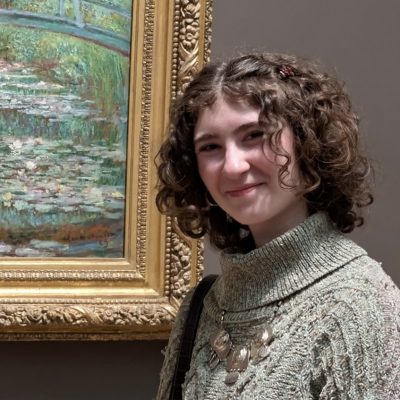
Kaitlyn Levine
“A Gallery of Fractured Light: Reimagining the Lives of Afflicted Artists Through Ekphrastic Poetry”
Project advisor: Sean Frederick Forbes
Kaitlyn Levine is a junior at the University of Connecticut, majoring in English with a minor in Philosophy and concentrations in cultural/media studies and creative writing. She is an executive writing editor for The Looking Glass Review, as well as a staff contributor and editor for The Aletheia Gazette, two international literary magazines dedicated to amplifying emerging voices. Her academic interests focus on the relationship between art, society, and lived experience, particularly the role of creative expression in interpreting a constantly evolving world. In her free time, Kaitlyn can be found reading and annotating with an ever-growing array of highlighters, writing in her notebook, and spending time in nature with friends and family.
For her fellowship project, Kaitlyn will embark on a journey of revitalization, reawakening the connection between the past and present through a reexamination of artists whose lives were tainted by suffering. Honing in on artistic expression, she will create a collection of ekphrastic poems, presenting how artists have been perpetually shaped by social marginalization, illness, and hardship. Her project examines how poetry can serve as a medium for reinterpreting artistic histories, bringing attention to aspects of artists’ lives that have been overlooked and silenced. In doing so, she seeks to challenge individuals to look beyond mere strokes of paint upon canvas and to recognize the deeper truths of despair, longing, passion, and perhaps even a final echo of tranquility in the moments before an artist's last breath. Ultimately, her work aims to contribute to broader conversations about how society’s intricate tensions shape individual artistry, leaving an imprint on both the artist and the work itself.
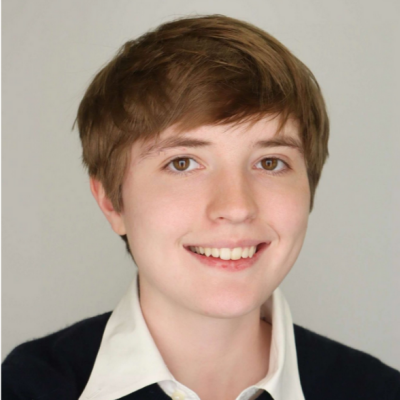
Nate Wylie
“You Have to Close Your Eyes: Senegal and the films of Djibril Diop Mambéty”
Project advisor: Mary Beth Allen
Nate Wylie is a sophomore at the University of Connecticut, majoring in History and Human Rights, and minoring in English. Nate is interested in global cultures and how they are expressed in music and art. They are currently involved in organizing with the American Friends Service Committee, and are a volunteer English tutor for World Tutors. For their fellowship project, Nate will use the films of Senegalese director Djibril Diop Mambéty as a lens for understanding post-Independence Senegal and the construction of a national identity in the wake of colonialism.