
The university is a place charged with imagining our collective future. We turn to the humanities to craft the values that will shape that future, and to guide us as we face the challenges ahead.
How do we know what we know? What does the truth look like? Consider these questions and more at our exhibition
Seeing Truth: Art, Science, Museums, and Making Knowledge
William Benton Museum of Art
January 17–March 10, 2023
Learn more
This exhibition is supported by the Henry Luce Foundation.
Image: Blazing the Trail to the Distant Past by Arthur A. Jansson, used with permission from the American Museum of Natural History.
Support Undergraduate innovation this UConn Gives with a gift to the UConn Humanities Institute.
What does it mean to be human?
UConn Humanities
We turn to the humanities to craft the values that will shape our future, and to guide us as we face the challenges ahead. What will it mean to be human in the face of technological and ecological upheaval? How does art and culture enable us to anticipate trends we want to embrace, and help us to avoid ancient pitfalls?
The mission of the UConn Humanities Institute (UCHI) is to catalyze, facilitate, and promote research on these questions, and advocate for that research on local and global stages. By hosting annual fellowships to support scholarship here at UConn and across the world, by supporting humanities-focused programming, and by facilitating an interdisciplinary space for scholars to think, collaborate, and create, UCHI serves as a creative laboratory for scholars and students dedicated to foregrounding human values.
Humanities Institute Success
Established, with the support of a grant from CLAS, the Human-Centered AI team, a cross-disciplinary team of over twenty UConn researchers, to advance AI research that integrates critical humanistic and social scientific perspectives.
Created, with our partners at the Université Internationale de Rabat, multidisciplinary dialogue on AI and its implementation in the US and Africa, supported by a grant of $25,000 by the Consortium of Humanities Centers and Institutes (CHCI).
Awarded a two-year grant of $140,000 by the National Endowment for the Humanities to investigate how legacies of slavery are shaping the perception and reception of conversational artificial intelligence.
Latest News and Events
Faculty Talk: Sandy Grande on Critical Place Theory
Sandy Grande will explore the epistemic impasses that often emerge between Indigenous and non-Indigenous theories of governance and (human) life. February 18, 12:15pm.
[Read More]
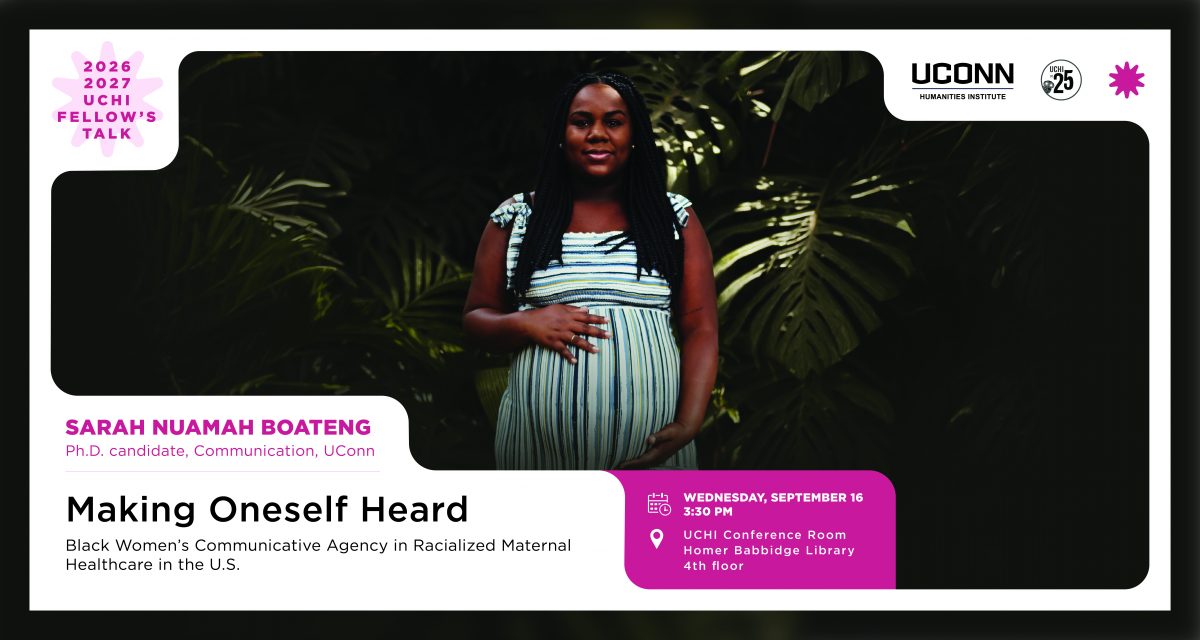
Fellow’s Talk: Harry van der Hulst on Sign Languages
Harry van der Hulst explores how sign languages that have recently come into existence provide a particularly interesting window into the origin of human language. February 18, 3:30pm.
[Read More]
Humanities Involvement Fair
Want to learn more about humanities, social science, and arts related opportunities at UConn? Stop by SU 331 on Feb. 11, between 12:30 and 4:30pm for the Humanities Involvement Fair.
[Read More]
Amanda Douberley says #YouShould...
Listen to Jeffrey O.G. Ogbar’s playlist for the exhibition Facing History

Robin Greeley says #YouShould...
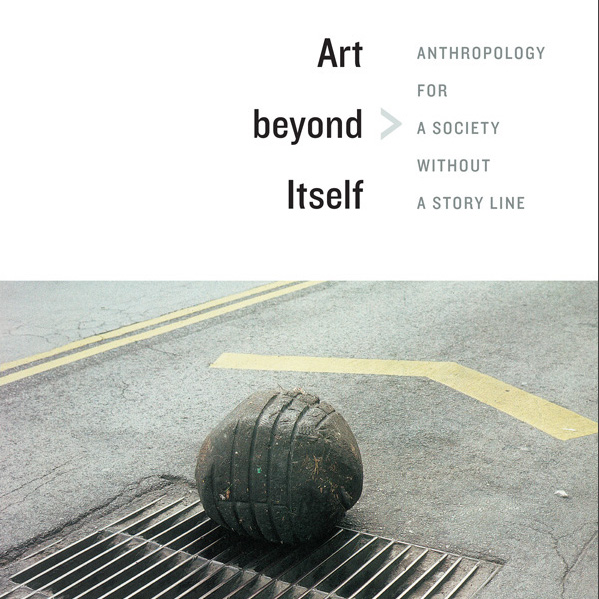
Read Néstor García Canclini’s Art beyond Itself (2014)

Manisha Desai says #YouShould...
Watch Sambhaji Bhagat

Stephen Dyson says #YouShould...
Watch Drive (2011)
Listen
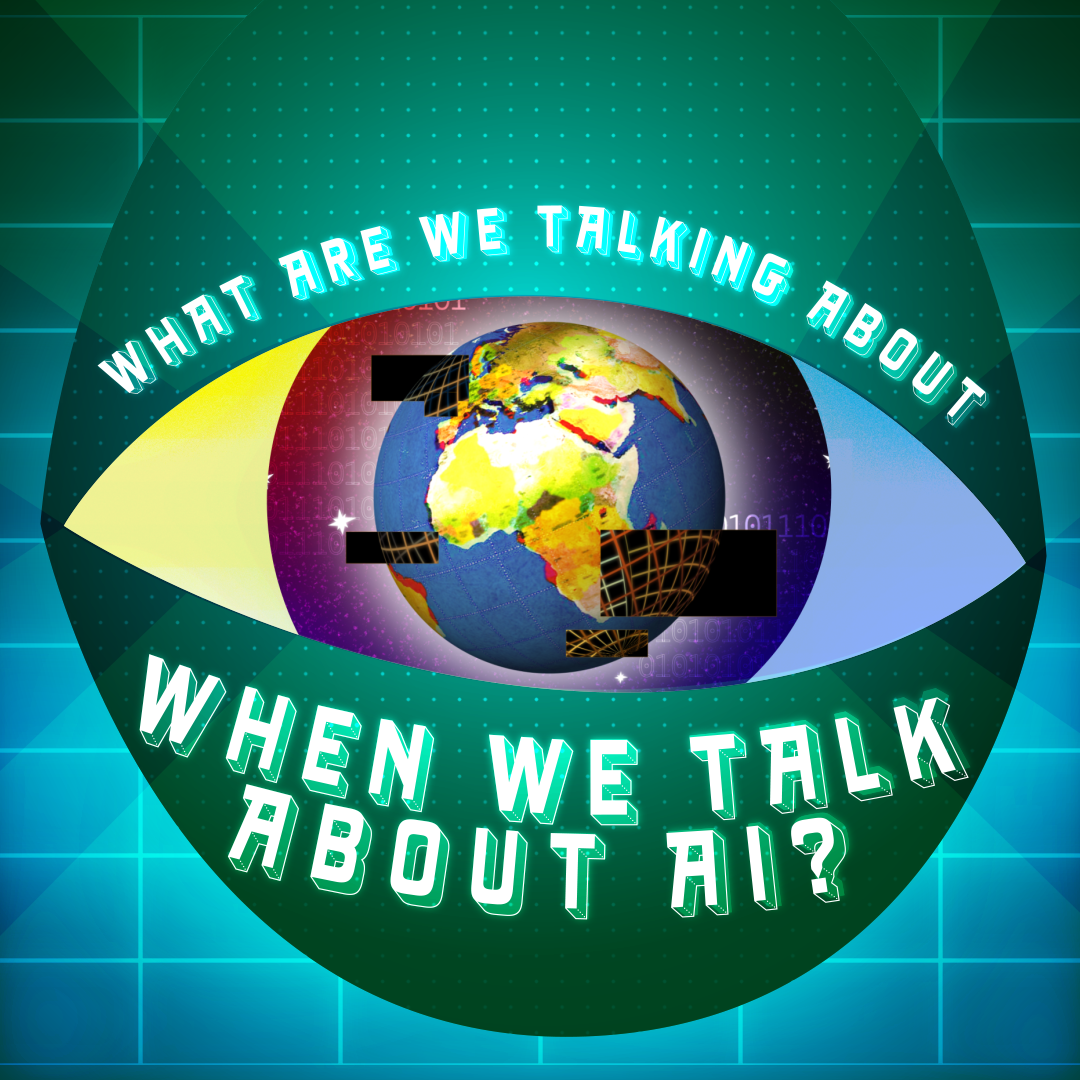
Ever wonder why AI conversations feel like people are talking past each other? That's because they are. Join scholars from around the world as they tackle the most important terms in AI—and discover they don't mean the same thing to everyone. From Storrs, Connecticut to Rabat, Morocco, from computer labs to philosophy seminars, we're eavesdropping on the conversations that reveal how different fields understand artificial intelligence. Spoiler alert: the differences matter more than you think. Made possible by funding from CHCI and the Mellon Foundation.
Subscribe to What Are We Talking About When We Talk About AI?