News

Today: Micki McElya Book Presentation, at the UConn Barnes & Noble at Storrs Center on Wednesday, Sept. 28 at 5:30 p.m

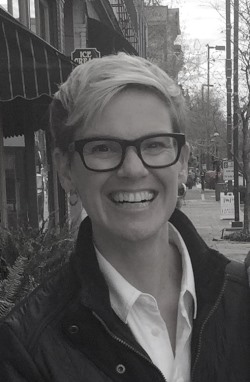
MickiUConn History Professor Micki McElya presents her new book, The Politics of Mourning: Death and Honor in Arlington National Cemetery
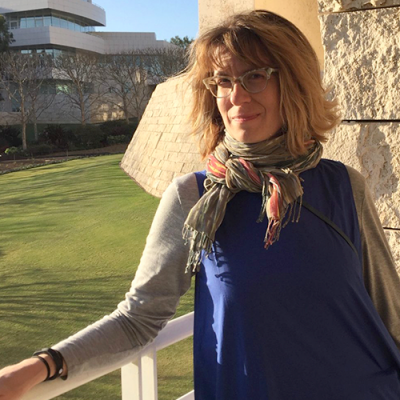
at the UConn Barnes & Noble at Storrs Center on Wednesday, Sept. 28 at 5:30 p.m.

Arlington National Cemetery is America’s most sacred shrine, a destination for four million visitors who each year tour its grounds and honor those buried there. For many, Arlington’s symbolic importance places it beyond politics. Yet as Micki McElya shows, no site in the United States plays a more political role in shaping national identity.

Arlington commemorates sacrifices made in the nation’s wars and armed conflicts. Yet it has always been a place of struggle over the boundaries of citizenship and the meaning of honor and love of country. A plantation built by slave labor overlooking Washington, D.C., Arlington was occupied by Union forces early in the Civil War. A portion was designated a federal cemetery in 1864. A camp for the formerly enslaved, Freedman’s Village, had already been established there in 1863, and remained for three decades.

The cemetery was seen primarily as a memorial to the white Civil War dead until its most famous monument was erected in 1921: the Tomb of the Unknown Soldier, symbolizing universal military sacrifice through the interment of a single World War I Unknown. As a century of wars abroad secured Arlington’s centrality in the American imagination and more Unknowns joined the first at the tomb, inclusion within its gates became a prerequisite for broader claims to national belonging. In revealing how Arlington encompasses the most inspiring and the most shameful aspects of American history, McElya enriches the story of this landscape, demonstrating that remembering the past and reckoning with it must go hand in hand.

Micki McElya is Associate Professor of History at the University of Connecticut.

For more information, contact: UConn Bookstore at 860-486-8525

http://dailydigest.uconn.edu/publicEmailSingleStoryView.php?id=62892&cid=24&iid=2046

“Humility In Politics” Event Kicks Off UConn’s Public Discourse Research Project

Humility and vulnerability are no longer values that are rewarded in the political arena, and it’s up to individuals, and their relationships, to begin a sea change that could “trickle up” into political leadership.

That was the message Tuesday evening as prominent political figures, journalists, educators, academics and nonprofit leaders came together for a public forum, titled “Humility in Politics,” in Washington, D.C.

Panelists and moderators from the Humility in Politics forum at the Folger Shakespeare Theater was held on Tuesday, September 20, 2016 in Washington, DC Photos by GH Studios. © Garrett Hubbard 2016

The event, sponsored by UConn’s Humanities Institute and a $5.75 million investment in UConn by the John Templeton Foundation, kicked off a three-year research initiative, aptly named The Humility and Conviction in Public Life project.

The project aims to investigate how intellectual humility – through being aware of our own innate biases and responses to new evidence – can overcome current political divisiveness.

“This is an unprecedented attempt to apply humanities and social science research to solve problems in the political sphere,” said Michael Lynch, professor of philosophy and director of the Humanities Institute, in his opening remarks.

continue here


The Humanities Institute is pleased to announce the appointment of Alexis L. Boylan as New Associate Director

Alexis L. Boylan, Associate Professor, (Art & Art History and Women’s, Gender, & Sexuality Studies).
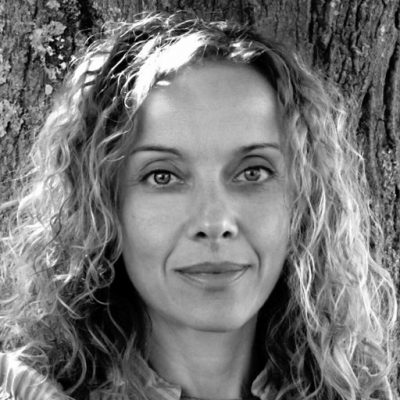
Professor Boylan’s research focus is on American art from the colonial to the contemporary periods, with particular emphasis on race and gender. She is succeeding Brendan Kane, Associate Professor (History) who is completing his term as Associate Director.


Congratulations to UCHI’s Communications Coordinator Tiziana Matarazzo, on her recent book

Micromorphological Analysis of Activity Areas Sealed by Vesuvius’ Avellino Eruption: The Early Bronze Age Village of Afragola in Southern Italy

Tiziana Matarazzo headshotThe remarkable preservation of the Early Bronze Age village of Afragola on the Campania Plain of Southern Italy is unmatched in Europe. The site was buried under nearly a meter of volcanic ash deposited by the Avellino eruption of Vesuvius ca. 3945+10 cal. BP. The site boasts a large number of well-preserved structures, built features and organic materials and thus provides a laboratory-type setting in which to investigate variability in artifact distribution and activity areas across a single village. This research utilizes micromorphological analysis of thin sections of undisturbed sediment collected at the site to understand how people used living spaces, organized daily activities and, when possible, to connect village life to broad issues related to the emergence of social complexity on the Campanian Plain. In particular, micromorphology is used to identify the type and range of human activities, the function of features and buildings, and the intensity of site occupation. The micromorphological analysis at Afragola provides a unique example of a briefly occupied agricultural village with what appears to be minimally stratified social organization during the Early Bronze Age of southern Italy.



Tiziana Matarazzo recently completed a Ph.D. in Anthropology at the University of Connecticut. Presently she is the Communications Coordinator and webmaster at the Humanities Institute.  She is also a research scientist affiliated with the Department of Anthropology at Uconn, where she continues her earlier research on the Micromorphology of archaeological sites in Southern Italy.

Philosopher Peter Singer at UConn, Thursday, October 9th, at 7:00 pm

Eminent philosopher Peter Singer will be joining us to kick off our UConn Reads programming next week.

“No Dilemma for Vegans: A Response to Pollan”

Thursday, October 9th, at 7:00 pm, at the Jorgensen Center

The Jorgensen will be open at 6:00 pm for classes only and 6:30 for the general public.

Tickets are not required: this event is free and open to the public.

The UConn Reads Steering Committee would like to encourage faculty to require their classes to attend this event.  Interested faculty can reserve priority seating for their classes by emailing Kathleen.mcdermott@uconn.edu in the Provost’s Office as soon as possible.  We will have a check-in desk set up in the Jorgensen lobby, and faculty are welcome to email a class roster to Kathy McDermott to facilitate student check-in.
https://www.ted.com/talks/peter_singer_the_why_and_how_of_effective_altruism
Many thanks are due to JC Beall for reaching out to Professor Singer, and to the co-sponsors for this event: Dining Services, the Human Rights Institute, Office of the Provost, Office of Global Affairs, Philosophy Department, and Humanities Institute.

Grant-Writing Workshop

Thursday, October 16, 2014

3:30 – 5:00 p.m.

Austin/CLAS room #301

The UCONN Humanities Institute will offer a grant-writing workshop for Humanities faculty on Thursday, October 16, 2014 from 3:30 – 5:00 p.m. in Austin/CLAS room #301.  Professor Mitchell Green, Professor of Philosophy will lead the workshop.  Professor Green recently joined the UCONN faculty and has been the recipient of grants from both the National Science Foundation and the National Endowment for the Humanities.  His presentation also will include a brief presentation by a representative from the CLAS Grants and Contracts department.  He will also offer a new opportunity for faculty participants to create working groups.  Participation is limited to 30 faculty members. 


Please contact the UCHI at uchi@uconn.edu or by telephone at (860) 486-9057 to reserve a space for the workshop.

New Director of UCHI

The University of Connecticut Humanities Institute (UCHI) is pleased to announce the appointment of Michael P. Lynch as Director of the Institute. His appointment became effective on July 1, 2014. Michael returns to the Institute as Director after having served as a member of the Advisory Board (2010-2012) and a Residential Faculty Fellow (2006-07).

Michael P. Lynch is Professor of Philosophy and has been at UConn since 2004. The author or editor of seven books including In Praise of Reason: What Rationality Matters for DemocracyTruth as One and Many, and True to Life, Lynch is the recipient of the Medal for Research Excellence from the University of Connecticut’s College of Liberal Arts and Sciences, and has held grants from the National Endowment for the Humanities and the Bogliasco Foundation. Lynch, whose work has been translated into multiple languages, is a contributor to the New York Times “The Stone” weblog, and has made appearances on NPR’s On PointThe Brian Lehrer ShowColin McEnroe and many others. He lectures frequently nationally and internationally, and is presently working on The Knowledge Machine: Knowing More and Understanding Less in the Age of Big Data (W.W. Norton).

Michael recently shared his goals for the Institute in an interview for the College of Liberal Arts and Sciences web post.

Michael replaces Sharon M. Harris as Director following her retirement from UConn after five years as Institute Director and nine years as Professor of English.

For more information, please see Dr. Lynch’s bio here.

UCHI Faculty Luncheon/Lecture Series

UCHI Faculty Luncheon/Lecture Series

Fall 2014

September 23, 2014

Tom Scheinfeldt (Digital Media & Design and Director of Digital Humanities in the Digital Media Center)

October 21, 2014

Kroum Batchvarov (Anthropology – Avery Point Campus)

November 18, 2014

Sylvia Schafer (History)

Talks take place at UCHI, Austin 301 at 12:30 pm. Lunch is provided and space is limited. Please contact uchi@uconn.edu or 486-9057 to reserve a seat.