A conversation with Alexander Heffner of PBS and UConn’s own Michael Lynch, Micki McElya, and Evenlyn Simean. The theme of the evening will be,
“Picking up the pieces”: Can we move on from this historically divisive election to rebuild some meaningful public discourse?
Alexander Heffner was a special correspondent for PBS’s Need to Know chronicling the Millennial vote in 2012. He founded and edited SCOOP08 and SCOOP44, the first-ever national student newspapers covering the 2008 campaign and the Obama administration, and taught a civic education/journalism seminar in New York City public school classrooms.
His writing has appeared in The Wall Street Journal, The Washington Post, The Boston Globe, The Philadelphia Inquirer, USA Today, Newsday and RealClearPolitics, among other leading newspapers and magazines. He has been interviewed about politics, education and stories in the news by PBS, C-SPAN, CNN and the BBC, among other national and local broadcast venues. He was political director and correspondent for WHRB 95.3 FM and host and managing editor of The Political Arena, a Sunday afternoon public affairs broadcast.
Heffner has given talks and moderated panels at major universities and colleges, including the University of California-Irvine, the College of Journalism and Mass Communications at the University of Nebraska-Lincoln, the School of Politics and Economics at Claremont Graduate University, the Harris School of Public Policy at the University of Chicago, the Berkman Center for Internet and Society at Harvard University, the Graduate School of Political Management at George Washington University, Long Island University and Bryn Mawr College.
He is a graduate of Andover and Harvard.

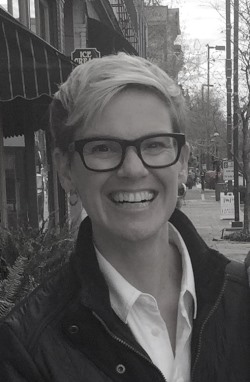 UConn History Professor Micki McElya presents her new book,
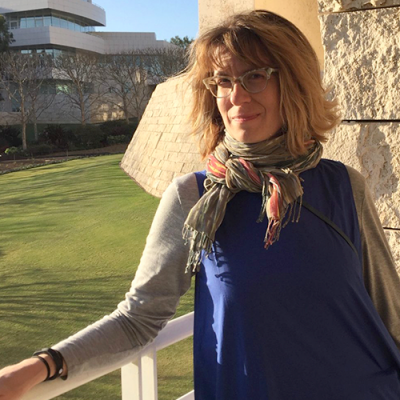 Alexis L. Boylan, Associate Professor, (Art & Art History and Women’s, Gender, & Sexuality Studies).
 The remarkable preservation of the Early Bronze Age village of Afragola on the Campania Plain of Southern Italy is unmatched in Europe. The site was buried under nearly a meter of volcanic ash deposited by the Avellino eruption of Vesuvius ca. 3945+10 cal. BP. The site boasts a large number of well-preserved structures, built features and organic materials and thus provides a laboratory-type setting in which to investigate variability in artifact distribution and activity areas across a single village. This research utilizes micromorphological analysis of thin sections of undisturbed sediment collected at the site to understand how people used living spaces, organized daily activities and, when possible, to connect village life to broad issues related to the emergence of social complexity on the Campanian Plain. In particular, micromorphology is used to identify the type and range of human activities, the function of features and buildings, and the intensity of site occupation. The micromorphological analysis at Afragola provides a unique example of a briefly occupied agricultural village with what appears to be minimally stratified social organization during the Early Bronze Age of southern Italy.